

Islands by Plan B: A Visual Identity of Connection and Care

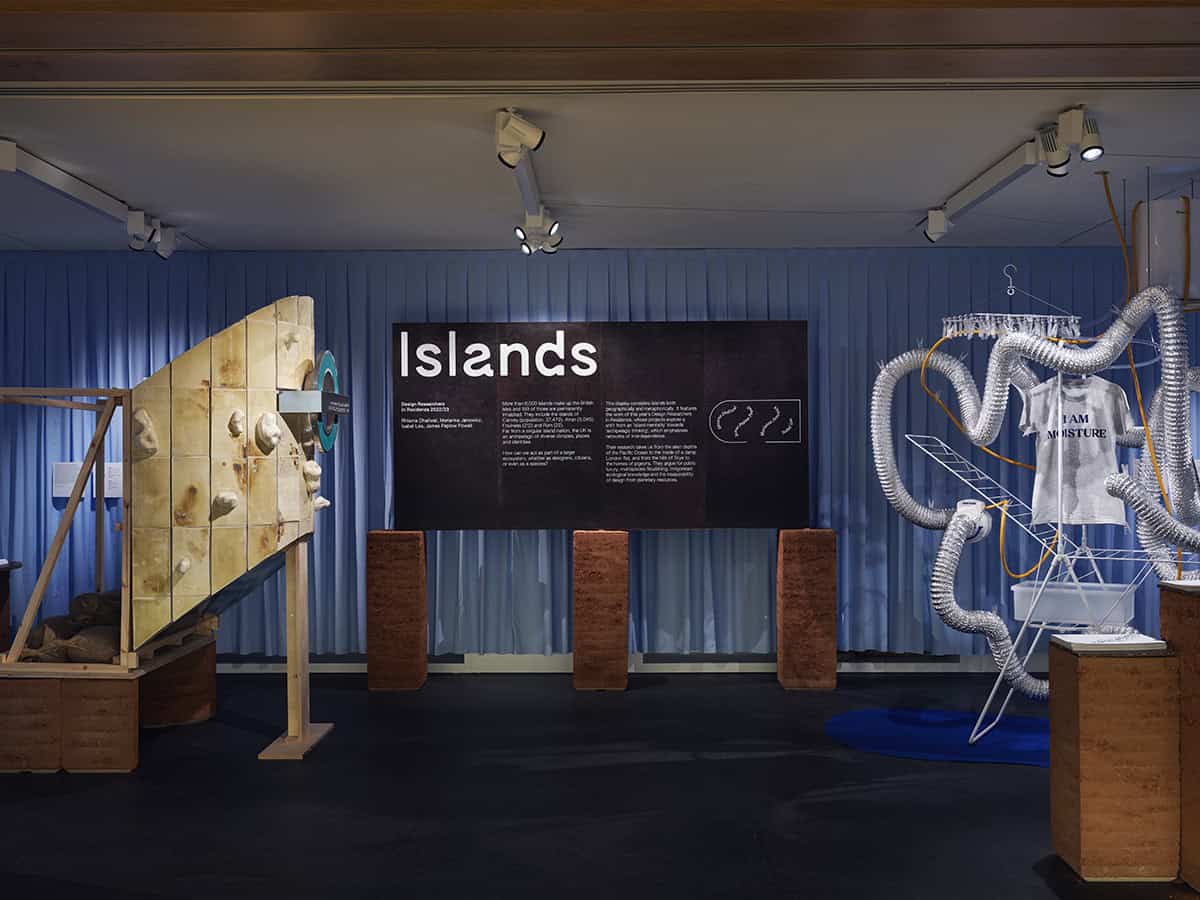
For the Researchers in Residence 2022 exhibition at the Design Museum, London-based studio Plan B was invited to create a visual identity around the theme “Islands.” Rather than portraying islands as solitary and remote, the studio reinterpreted them as spaces of interconnection — living ecosystems rich in biodiversity, language, and culture, yet intrinsically linked within a shared whole.
Drawing inspiration from decolonial mapping theories, Plan B developed a layered visual language that captured the movement of tides, the contours of topography, and the fluid borders that define the exchange of knowledge between cultures. Each researcher’s project was conceived as an individual island — distinct in its visual expression yet part of a larger, interconnected archipelago of ideas.

Sustainability was not an afterthought but a fundamental element of the exhibition’s making. The installation used washable window paints, hemp boards, seaweed paper, and earth plinths — materials chosen to echo the ecological fragility and resilience that islands symbolize. This commitment to sustainable design reinforced the exhibition’s core message: that creative and environmental interdependence are inseparable.


Delivered in collaboration with Msoma Architects, Islands extended beyond visual identity to become a statement of care, responsibility, and shared ecology. The project invited audiences to rethink not only how islands are mapped, but how ideas, people, and materials coexist within a global ecosystem.
This thoughtful approach reflects Plan B’s broader practice. The boutique branding studio merges conceptual clarity, research-led design, and meticulous craft, moving fluidly between cultural institutions, premium brands, and international organizations. Drawing from a global network of strategists and collaborators, Plan B consistently grounds its work in sustainability, cultural resonance, and editorial sensibility.
Curator and Editor: George Kafka
Assistant Curator and Editor: Lila Boschet Exhibition
