Cross-Stitch: Paula Jõers Transforms Estonian Craft Traditions into Experimental Typography
Estonian graphic designer Paula Jõers explores the relationship between traditional craftsmanship, cultural identity and contemporary typography through Cross-Stitch, an experimental modular typeface created entirely from hand-stitched embroidery. Drawing inspiration from the geometric patterns found in traditional Estonian mittens and socks, the project reinterprets a centuries-old visual language through the structure of letterforms, connecting textile heritage with modern graphic design.
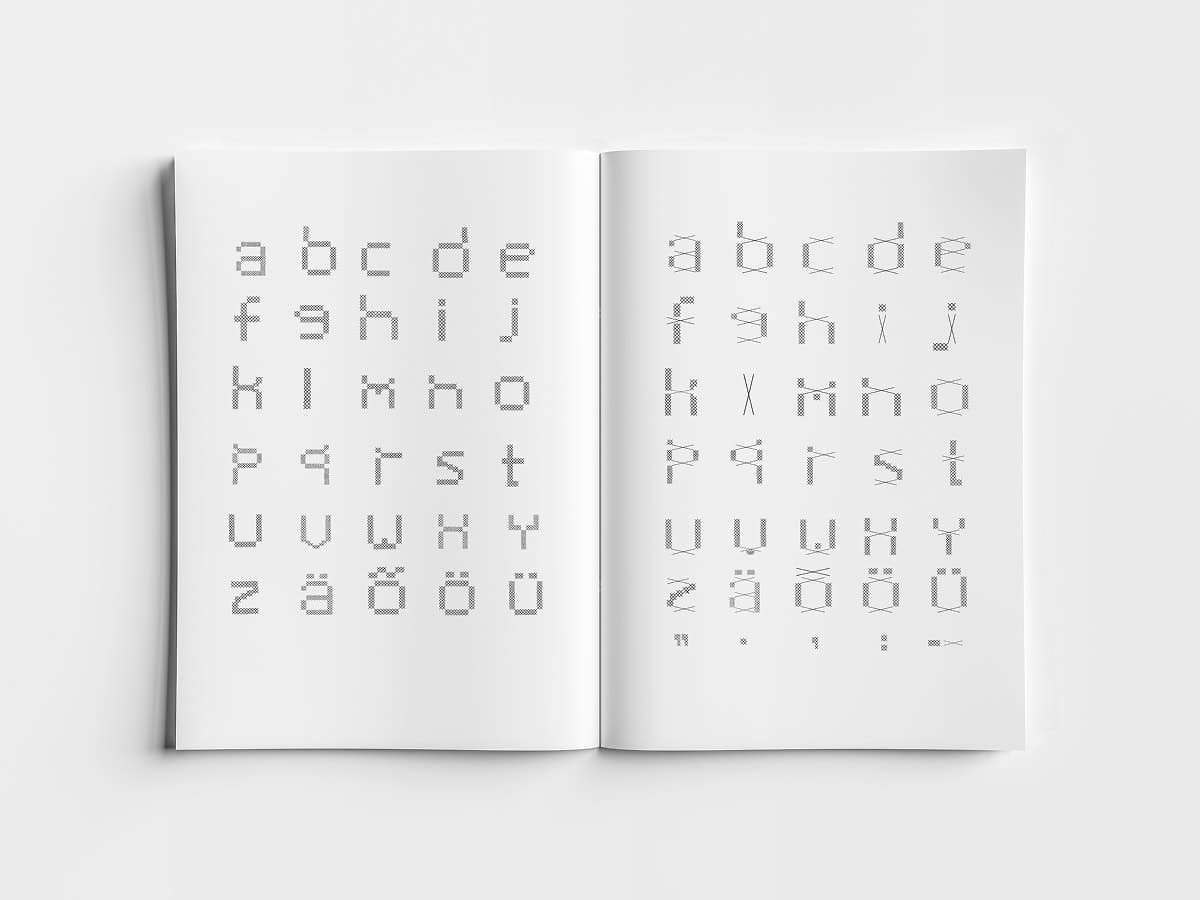
The typeface follows the same principles used to create traditional knitted patterns, where individual squares form intricate compositions through repetition and careful arrangement. Influenced by the modular typographic explorations of Muir McNeil and Nigel Cottier, Jõers developed a system in which each character emerges from a fixed grid. The process began on paper, with squares added and removed to define the shape of each letter before being meticulously embroidered by hand and subsequently digitised.


Working within the limitations of even-weave fabric introduced a distinctive set of design challenges. Every character, including the Estonian letters õ, ä, ö and ü, needed to maintain consistent proportions, rhythm and visual weight. Rather than treating these constraints as obstacles, Jõers incorporated them into the design process, allowing the physical characteristics of cross-stitch embroidery to determine the typeface’s structure and spacing.
The resulting letterforms challenge conventional ideas of readability. Through a deliberate exploration of negative space and geometric repetition, Cross-Stitch encourages viewers to interpret typography as a visual pattern rather than immediately recognisable text. This approach creates an interesting tension between communication and decoration, transforming letters into compositions that require closer observation.
Beyond its formal experimentation, the project carries a deeper cultural significance. Traditional Estonian knitted garments often featured symbolic motifs believed to protect their wearers from harm and negative forces. Inspired by natural elements such as leaves, flowers and blossoms, these symbols gradually evolved into geometric patterns, becoming an important form of visual expression passed down through generations. By translating their underlying structure into typography, Jõers investigates how cultural traditions can be preserved, transformed and reinterpreted through contemporary design practices.


Originally conceived as part of a booklet introducing Estonian history and culture, Cross-Stitch emerged from Jõers’ desire to celebrate her country’s heritage through a traditional art form. The typeface was initially used to present Estonian proverbs and expressive sentences, creating a direct connection between language, national identity and craftsmanship.
As the project developed, its visual system expanded beyond typography into digital pattern-making and poster design. These applications provide new opportunities to experiment with composition, scale and repetition, demonstrating how a traditional embroidery technique can generate an adaptable contemporary graphic language.
Paula Jõers is a graphic designer whose multidisciplinary practice spans branding, motion design and print. Combining a strong appreciation for structure and detail with an experimental approach to visual communication, she explores the possibilities that emerge when different creative disciplines intersect. Through Cross-Stitch, Jõers demonstrates how traditional techniques can become a starting point for contemporary experimentation, offering a thoughtful reflection on the relationship between cultural memory, material processes and graphic design.